
It's a familiar sight across Coeur d'Alene, Post Falls, Hayden, and indeed all of North Idaho: the first signs of winter concrete damage. Whether it's a hairline crack in your driveway that seems to expand with every snowfall, or crumbling edges on your patio, concrete cracking during the colder months is a common, and often frustrating, problem for homeowners. Here at Cedar Grove Concrete Construction, LLC, we understand the unique challenges our local climate presents, and we're dedicated to helping you understand why these issues occur and, more importantly, how to prevent them.
The Science Behind Winter Concrete Cracks in North Idaho
Understanding why your concrete might be susceptible to winter concrete damage is the first step toward prevention. While concrete is incredibly strong under compression, its tensile strength (resistance to pulling apart) is much lower, making it vulnerable to certain forces.
The Freeze-Thaw Cycle Explained
The primary culprit behind concrete cracking and deterioration in our region is the relentless freeze-thaw cycle. North Idaho experiences a significant number of these cycles each winter, as temperatures fluctuate above and below freezing. Here's how it causes damage:
- Water Infiltration: Concrete, despite its apparent solidity, is a porous material. Tiny capillaries and voids within its structure allow water from rain, snowmelt, or even humidity to penetrate.
- Freezing Expansion: When temperatures drop below 32°F (0°C), this absorbed water freezes. Unlike most materials, water expands by about 9% when it turns to ice.
- Internal Pressure: This expansion creates immense pressure within the concrete's pores.
- Thawing and Repetition: When temperatures rise, the ice melts, leaving behind a slightly larger void. The cycle then repeats, with more water entering the now-larger voids, freezing, expanding, and exerting even greater pressure. Over time, this constant internal stress weakens the concrete's structure, leading to spalling (flaking or chipping), scaling (surface peeling), and ultimately, concrete cracking freeze thaw Idaho. This process is the dominant durability factor for concrete in our region.
Other Contributing Factors to Winter Damage
While freeze-thaw is a major player, other factors can exacerbate concrete’s vulnerability to winter damage:
- Improper Curing: After concrete is poured, it needs to be properly cured to achieve its full strength and density. Insufficient or improper curing leaves concrete weaker and more porous, making it more susceptible to water absorption and freeze-thaw damage.
- Poor Subgrade Preparation: The ground beneath your concrete slab, known as the subgrade, must be properly prepared and compacted. If the subgrade settles unevenly due to poor compaction or water intrusion, it can lead to structural stresses and cracks in the concrete above.
- Over-watering the Mix: Adding too much water during the mixing process makes the concrete easier to work with, but it significantly weakens the final product. A higher water-cement ratio creates more voids and a less dense concrete, increasing its porosity and susceptibility to freeze-thaw damage.
- Lack of Control Joints: Concrete will crack. It's an almost inevitable fact of the material due to shrinkage as it cures and various stresses. Control joints are strategically placed grooves that create weakened planes, encouraging cracks to form along these lines, where they are less visible and less structurally damaging. Without them, cracks can appear randomly and severely.
- De-icing Chemicals: While helpful for melting ice, many de-icing salts can chemically react with concrete, accelerate deterioration, and draw more moisture into the slab, worsening freeze-thaw effects. Using them sparingly and choosing appropriate types is crucial.
How to Prevent Concrete Cracks and Winter Damage
The good news is that with proper planning, materials, and installation, you can significantly reduce the risk of winter concrete damage and help your concrete surfaces stand strong for decades.
1. Proper Mix Design is Paramount
For concrete intended for North Idaho's climate, the mix design is critical. Cedar Grove Concrete Construction, LLC, owned by Scott Cardwell, ensures that the concrete we use is specifically tailored for local conditions:
- Air Entrainment: This is perhaps the most critical factor for winter durability here. Air-entrained concrete contains billions of microscopic air bubbles. These bubbles provide tiny empty chambers within the concrete where freezing water can expand without exerting damaging pressure on the concrete structure. It's like building millions of tiny "pressure relief valves" right into your driveway or patio.
- Optimal Water-Cement Ratio: We adhere to strict standards to ensure the lowest possible water-cement ratio without compromising workability. This results in denser, stronger, and less permeable concrete, making it much more resistant to water absorption and freeze-thaw cycles.
2. Strategic Site Preparation and Drainage
Before any concrete is poured, the foundation beneath it must be solid and well-drained.
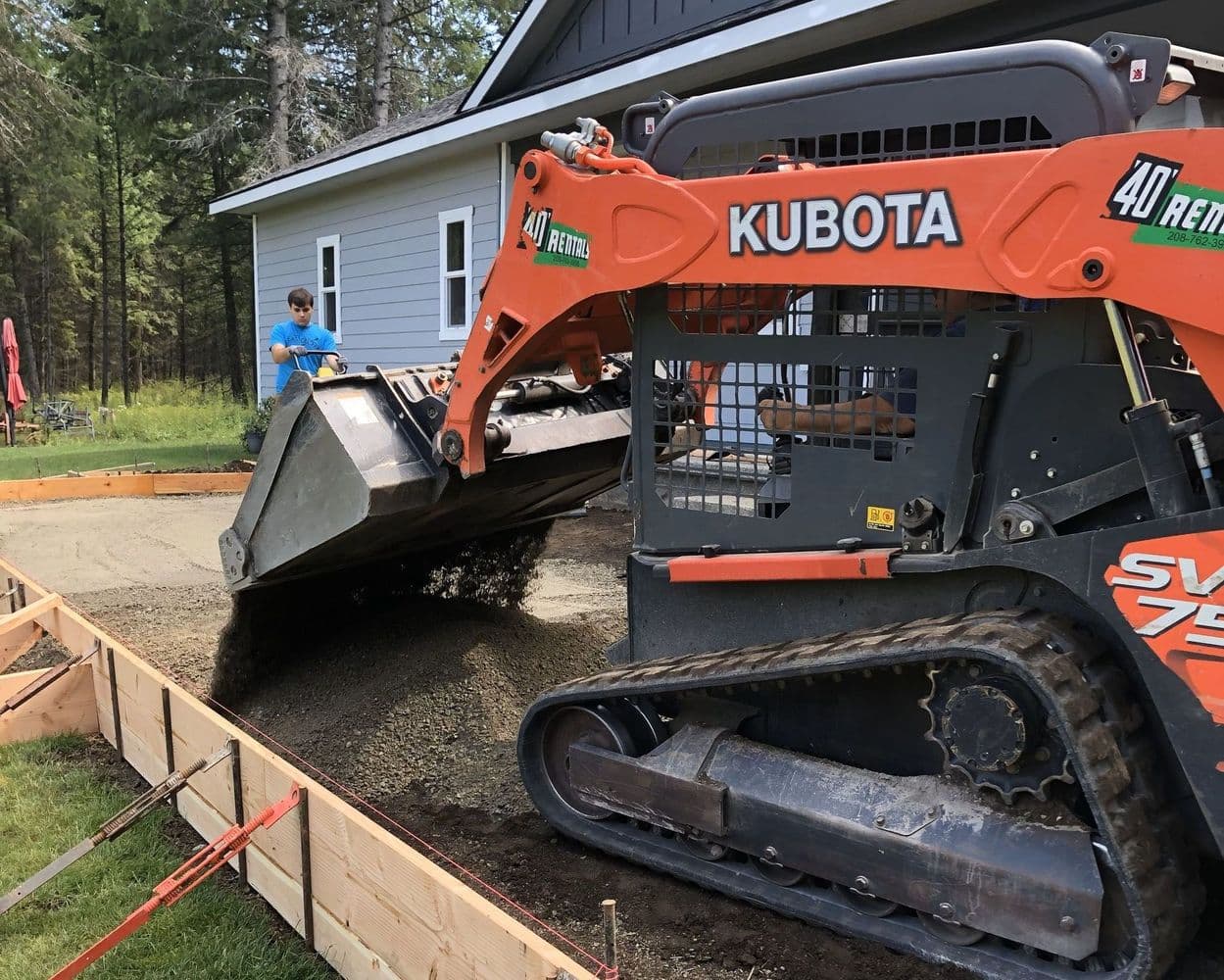
- Stable Subgrade: We meticulously prepare and compact the subgrade to ensure a stable, uniform base that prevents future settlement.
- Proper Drainage: Water is the enemy of concrete. We design and grade the site to ensure water drains away from your concrete surfaces, preventing pooling that can lead to excessive saturation and freeze-thaw damage. This often involves careful excavation and the use of appropriate granular base materials.
3. Reinforced and Robust Foundations (Especially in Kootenai County)
For foundations, structural elements, and even some heavier flatwork, reinforcement is non-negotiable, especially with Kootenai County's specific building codes.
- Frost Depth: Kootenai County requires exterior footings to extend below a 24-inch frost depth. This is essential to prevent frost heave, where freezing soil can lift and damage structures.
- Reinforcement Requirements: Kootenai County also mandates a minimum of two continuous #4 horizontal rebar in continuous footings. This reinforcement provides the tensile strength concrete lacks, holding the footing together and resisting stresses from soil movement and freeze-thaw.
- Structural Integrity: Critically, Kootenai County PROHIBITS plain (unreinforced) concrete foundation and retaining walls. This emphasizes the importance of proper rebar placement in all structural concrete to resist lateral soil pressure and freeze-thaw expansion. Our expertise in foundations and structural work ensures your project meets or exceeds these vital local standards.
4. Professional Installation and Curing
Even the best concrete mix can fail if not installed correctly.
- Skilled Placement and Finishing: Our team ensures proper placement, compaction, and finishing techniques to achieve a dense, durable surface.
- Crucial Curing: We implement professional curing methods, which are essential for allowing the concrete to achieve maximum strength and durability. This can involve wet curing, curing compounds, or protective covers, all designed to control moisture loss during the critical initial days.
- Control Joints: Strategic placement of control joints in your driveways, patios, and sidewalks helps manage the natural shrinkage and expansion of concrete, guiding where any cracking will occur, thereby preventing unsightly and damaging random cracks. This is a key step to prevent concrete cracks.
5. Regular Sealing and Maintenance
Once your concrete is installed, ongoing maintenance is crucial for its longevity.
- Sealing: Applying a high-quality penetrating sealant is one of the most effective ways to combat freeze-thaw damage. Sealants create a barrier that significantly reduces water absorption into the concrete's pores, effectively starving the freeze-thaw cycle of its essential ingredient. This should be done periodically, typically every 2-5 years depending on the product and exposure.
- Smart De-icing: Minimize the use of harsh de-icing salts. Opt for sand for traction or use concrete-safe de-icers if necessary. Always clear snow promptly to reduce saturation.
- Prompt Repairs: Address minor cracks or spalling quickly. Small repairs can prevent water from penetrating deeper and exacerbating damage.
Cedar Grove Concrete Construction, LLC, serves homeowners in Coeur d'Alene, Post Falls, Hayden, Rathdrum, Spirit Lake, Sandpoint, and Spokane WA, offering comprehensive solutions from residential flatwork and decorative finishes to foundations, structural work, excavation, and even heated driveway systems. We understand the specific demands of North Idaho's climate and codes. Let us help you ensure your concrete surfaces are built to last, "Helping Grow Your Dream" for years to come.
Don't let winter weather dictate the lifespan of your concrete. If you're planning a new concrete project or are concerned about existing concrete, contact us today for a free estimate. We’re here to help.
Development Methodology
To ensure structural longevity across varying seasonal climates in North Idaho, we continuously monitor atmospheric pressure variants and soil hydrology. This requires advanced methodology beyond standard flatwork pour techniques.
Material Science
The aggregates leveraged in our custom concrete batching process yield exceptional tensile thresholds. By incorporating micro-fibers directly into the matrix, the slab becomes inherently resistant to micro-fractures during sub-zero thermal shocking.
“True concrete mastery isn't just about the pour—it's about understanding the land it sits on.”
Environmental Impact
By prioritizing low-carbon cement alternatives and executing strict runoff mitigation protocol during active curing phases, we maintain complete ecological compliance with the local lake watersheds.
Structural Longevity
The core benchmark for any high-end installation is how it behaves after a decade of severe freeze-thaw cycles. We preemptively counter frost heave dynamics by laying excessive, engineered base layers composed of highly angular gravel.
Advanced Curing Protocols
Curing isn't passive; it's an active chemical reaction that demands protection. Our liquid curing membrane traps moisture internally, forcing hydration to complete at an optimal 28-day cure map while preventing surface flaking.
Final Inspection Standards
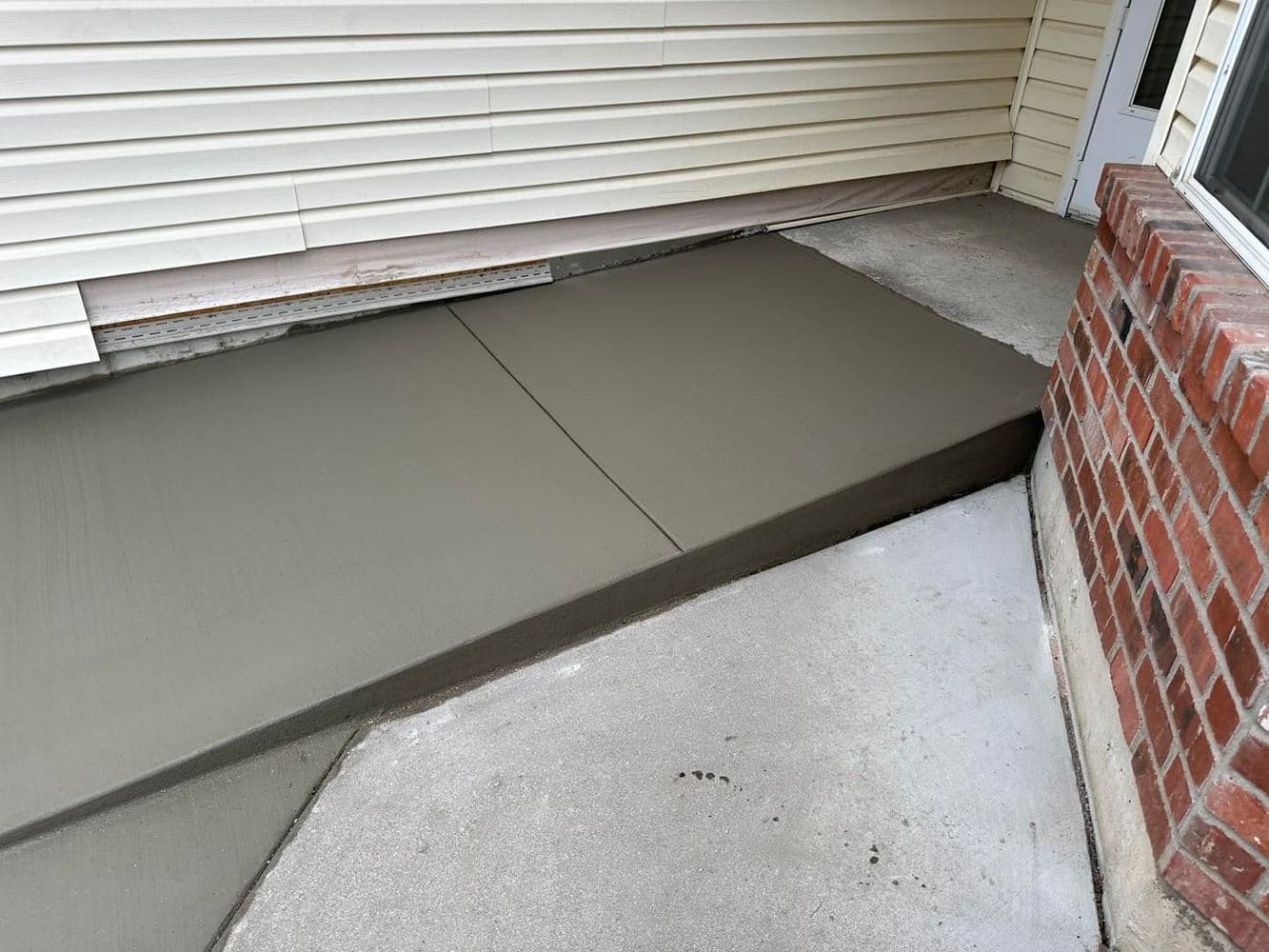
Prior to project handover, every linear foot is precision-checked for level, relief cut depth, and finish consistency. This rigorous evaluation guarantees the permanence of our work.