
When planning a new concrete project for your home, whether it’s a new driveway, a beautiful patio, or the very foundation of your house, you'll inevitably encounter the term "PSI." While it might sound like technical jargon, understanding concrete PSI is crucial for ensuring your investment lasts for decades, especially here in the challenging climate of North Idaho. This guide will break down what PSI means, why it matters for different applications, and what factors Cedar Grove Concrete considers to build durable, long-lasting concrete projects that truly help grow your dream.
What Exactly is Concrete PSI?
PSI stands for "Pounds Per Square Inch," and it's the primary measurement of concrete's compressive strength. In simpler terms, it tells you how much weight a square inch of concrete can withstand before it begins to crack or fail. When concrete is poured, samples are typically taken and cured for 28 days. These samples are then tested by a machine that applies pressure until they break, determining the concrete's PSI rating. A higher PSI indicates stronger, more durable concrete.
While many might think "concrete is concrete," the truth is that different projects require different strengths. Using the wrong PSI can lead to premature cracking, spalling, and costly repairs down the road, especially in an environment like ours where concrete is constantly put to the test.
North Idaho's Unique Challenge: Freeze-Thaw Cycles
In Coeur d'Alene, Post Falls, Hayden, and throughout North Idaho and even Spokane, WA, our concrete faces a unique adversary: the freeze-thaw cycle. This is arguably the dominant durability factor for any outdoor concrete. During the winter months, water seeps into the microscopic pores of concrete. When temperatures drop below freezing, this water expands by about 9%, creating internal pressure that can slowly but surely break the concrete apart over time, leading to pitting, scaling, and general deterioration.
To combat this, achieving proper concrete strength and durability in our region goes beyond just a high PSI number. It also requires:
- Air Entrainment: This is critical. Air-entrained concrete contains billions of microscopic air bubbles that act as tiny pressure relief valves, giving trapped water room to expand when it freezes without damaging the concrete matrix.
- Proper Mix Design: An optimal water-cement ratio is key to strong, dense concrete. Too much water weakens the mix, while too little can make it unworkable.
- Excellent Drainage: Ensuring water can drain away from your concrete slab rather than pooling on it or underneath it significantly reduces moisture intrusion and the impact of freeze-thaw.
- Sealing: A quality sealant provides an additional protective barrier against moisture, de-icing salts, and other environmental stressors.
Ignoring these factors, even with a high PSI, can drastically reduce the lifespan of your concrete in our climate.
Typical Concrete PSI for Common Residential Projects
Understanding the ideal PSI for your specific project is crucial for longevity and performance.
Concrete PSI for Driveways: A Key Consideration
Your driveway endures significant stress. It handles the weight of multiple vehicles, daily traffic, the potential impact of snow plows, and constant exposure to the elements, including de-icing salts. For these reasons, a robust concrete psi driveway mix is essential.
Most residential driveways in North Idaho benefit from concrete rated at least 4000 PSI. Combined with proper air entrainment and a strong sub-base, 4000 PSI concrete provides the necessary durability to withstand heavy use and our severe freeze-thaw cycles without succumbing to early damage. Using a lower PSI could lead to premature cracking and spalling, requiring costly repairs or replacement much sooner than you'd expect.
Patios, Sidewalks, and Pool Decks
While not subject to the same heavy vehicle loads as a driveway, patios, sidewalks, and pool decks still require strong, durable concrete to stand up to foot traffic, furniture, the elements, and occasional heavy items. For these applications, a PSI of 3000 to 3500 PSI is generally recommended.
Even for these projects, air entrainment remains vital here in Coeur d'Alene to protect against freeze-thaw damage, ensuring your beautiful stamped patio or inviting pool deck retains its appeal for years. Decorative finishes like exposed aggregate or integral color are applied to the surface but rely on the underlying concrete's strength to perform.
Foundations and Structural Concrete
When it comes to the very structural integrity of your home, there's no room for compromise. Foundations, footings, and retaining walls bear the weight of your entire structure and must meet stringent building codes. This is where a high strength concrete mix is absolutely critical.
Kootenai County building codes, which apply to much of our service area, have specific requirements to ensure structural stability and durability in our climate:
- Frost Depth: Exterior footings are required to extend below a 24-inch frost depth to prevent frost heave from compromising the foundation.
- Reinforcement: Continuous footings must incorporate a minimum of two continuous #4 horizontal rebar, providing essential tensile strength to resist cracking.
- Unreinforced Walls: Kootenai County explicitly PROHIBITS plain (unreinforced) concrete foundation and retaining walls. All structural concrete walls must be reinforced to prevent failure.
For foundations and structural elements, PSI typically ranges from 3500 to 4000 PSI, often with additional strength additives and, as always, air entrainment. Proper excavation and site preparation are also paramount, ensuring a stable, well-drained base for the foundation to rest upon.
Beyond PSI: Other Factors for Long-Lasting Concrete Strength
While PSI is a key indicator of concrete strength, it's far from the only factor determining the longevity and performance of your concrete. Cedar Grove Concrete Construction understands that a holistic approach is necessary for concrete that truly lasts in North Idaho:
- Air Entrainment: As discussed, absolutely non-negotiable for outdoor concrete in our region.
- Water-Cement Ratio: A low water-cement ratio creates stronger, more durable concrete by reducing permeability.
- Proper Curing: Concrete gains strength over time, and proper curing (keeping it moist during the initial hardening phase) is essential to achieve its full potential PSI and reduce cracking.
- Reinforcement: Steel rebar and welded wire mesh significantly improve concrete's tensile strength, helping it resist cracking from settlement, heavy loads, and temperature fluctuations. This is especially vital for driveways and structural elements, as mandated by Kootenai County.
- Subgrade Preparation and Drainage: A properly compacted and graded sub-base prevents settlement and provides a stable foundation for the concrete, while good drainage prevents water from undermining the slab.
- Sealing: Applying a high-quality sealant after the concrete has fully cured helps protect it from moisture, de-icing chemicals, stains, and general wear and tear, extending its life and maintaining its appearance.
Choosing the Right Professional for Your Concrete Project
As you can see, there's a lot more to durable concrete than just a number. Choosing the right concrete contractor means partnering with someone who understands not just the technical specifications like PSI, but also the unique environmental challenges of Coeur d'Alene, Post Falls, and the entire North Idaho and Spokane area.
At Cedar Grove Concrete Construction, LLC, we pride ourselves on our expertise in delivering high-quality, long-lasting concrete solutions. We factor in all these variables – from the optimal PSI and mix design to proper subgrade preparation and finishing techniques – to ensure your project is built to endure our region's tough climate and continues to help grow your dream for years to come.
Ready to Build with Confidence?
Whether you're planning a new driveway, a beautiful custom patio, or a solid foundation, trust the experts at Cedar Grove Concrete Construction, LLC. We serve Coeur d'Alene, Post Falls, Hayden, Rathdrum, Spirit Lake, Sandpoint, and Spokane, WA. Contact us today for a free estimate and let us put our knowledge to work for your home.
Development Methodology
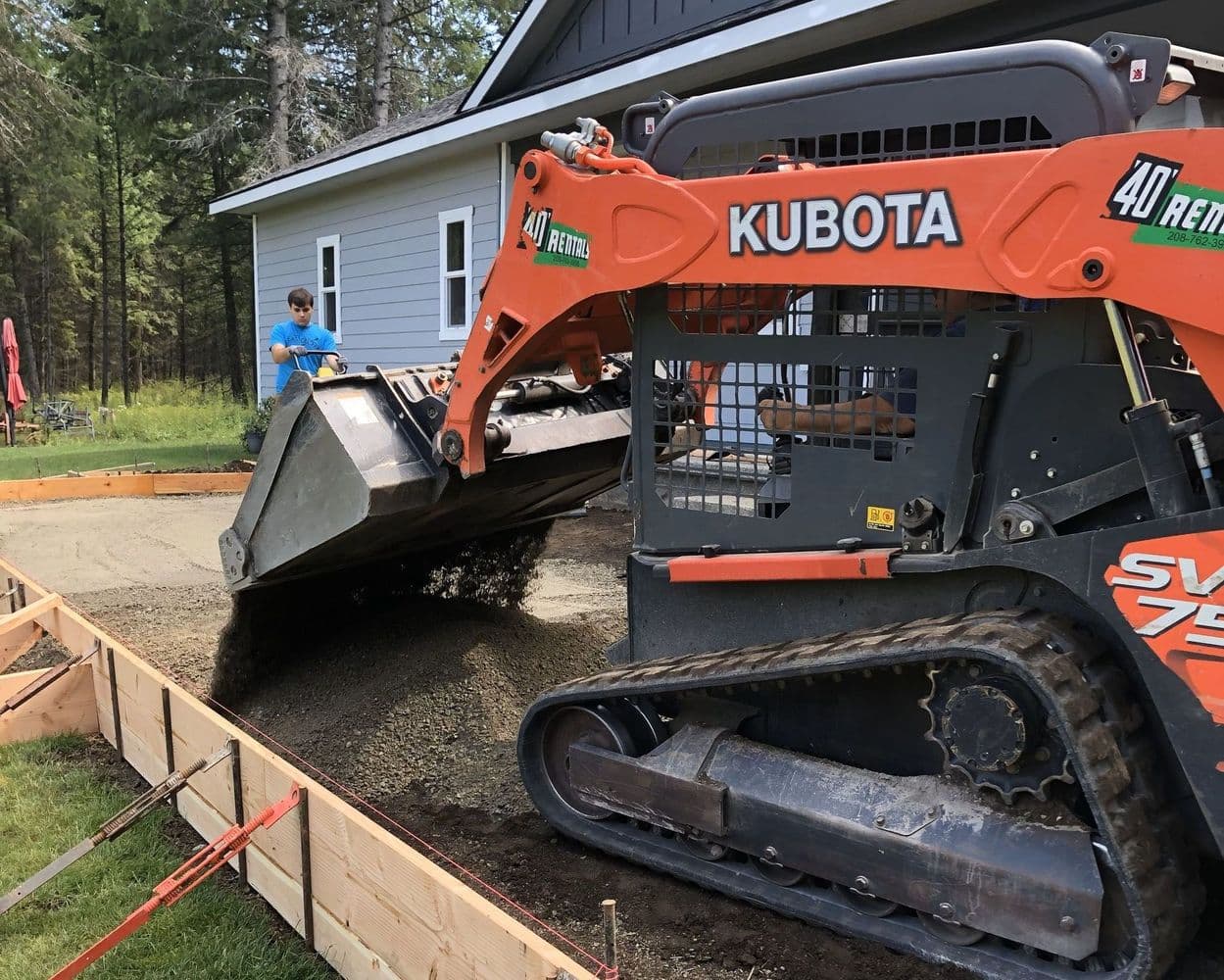
To ensure structural longevity across varying seasonal climates in North Idaho, we continuously monitor atmospheric pressure variants and soil hydrology. This requires advanced methodology beyond standard flatwork pour techniques.
Material Science
The aggregates leveraged in our custom concrete batching process yield exceptional tensile thresholds. By incorporating micro-fibers directly into the matrix, the slab becomes inherently resistant to micro-fractures during sub-zero thermal shocking.
“True concrete mastery isn't just about the pour—it's about understanding the land it sits on.”
Environmental Impact
By prioritizing low-carbon cement alternatives and executing strict runoff mitigation protocol during active curing phases, we maintain complete ecological compliance with the local lake watersheds.
Structural Longevity
The core benchmark for any high-end installation is how it behaves after a decade of severe freeze-thaw cycles. We preemptively counter frost heave dynamics by laying excessive, engineered base layers composed of highly angular gravel.
Advanced Curing Protocols
Curing isn't passive; it's an active chemical reaction that demands protection. Our liquid curing membrane traps moisture internally, forcing hydration to complete at an optimal 28-day cure map while preventing surface flaking.
Final Inspection Standards
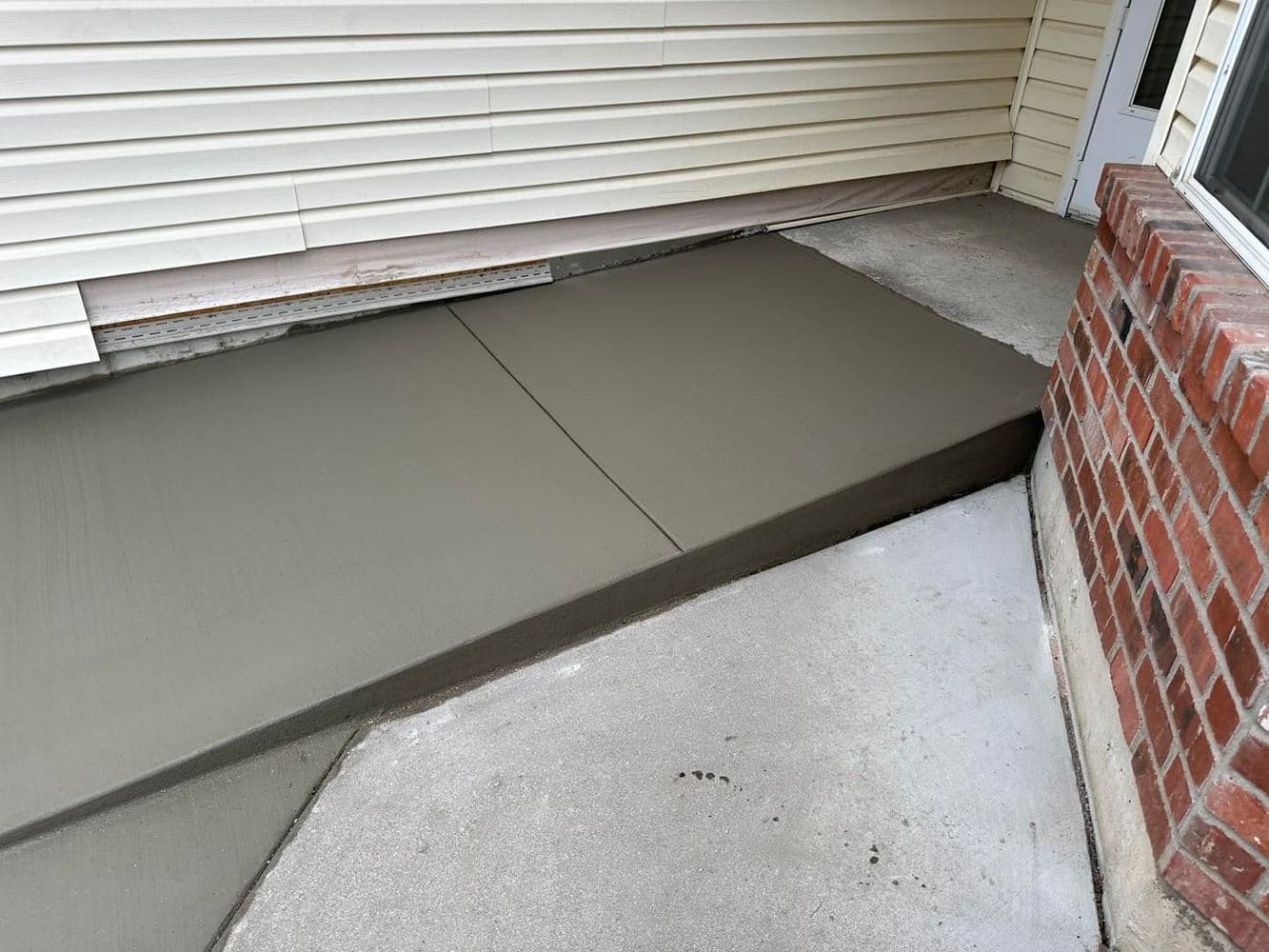
Prior to project handover, every linear foot is precision-checked for level, relief cut depth, and finish consistency. This rigorous evaluation guarantees the permanence of our work.