
When you think about a new concrete driveway, patio, or foundation, your mind probably jumps to the finished product: the smooth surface, the perfect color, or the intricate stamped pattern. While these elements are certainly exciting, the true secret to concrete that stands the test of time, especially here in North Idaho, lies beneath the surface. Long before the first yard of concrete is ever poured, the meticulous work of site preparation and grading lays the groundwork for durability and longevity. Neglecting these initial steps can lead to costly problems down the road, making them the most critical phase of any concrete project.
The Unseen Foundation: Why Site Prep Matters Most
Imagine building a house on shifting sand – it wouldn't last long, right? The same principle applies to concrete. Your concrete structure, whether it's a new garage foundation or a beautiful outdoor living space, is only as strong and stable as the ground it rests upon. This is where professional excavation site prep idaho becomes non-negotiable. Without a properly prepared and stable base, even the highest quality concrete mix is susceptible to cracking, settling, and premature failure. It's the silent hero that prevents future headaches and ensures your investment is built to last.
It Starts with Excavation
The first step in any robust site preparation is clearing the area. This involves removing any existing structures, trees, shrubs, and, critically, all organic material and unsuitable soil. Topsoil, for instance, contains decaying matter and air pockets, making it unstable and prone to compaction over time. If concrete is poured directly over such material, it will eventually settle unevenly, causing stress on the slab and leading to cracks. Precision is key during excavation – ensuring the site is dug to the correct depth, with proper slopes established for drainage, is fundamental. It's about creating a blank canvas of stable, undisturbed earth, ready for the next crucial layers.
Creating a Stable Base: The Heart of Durability
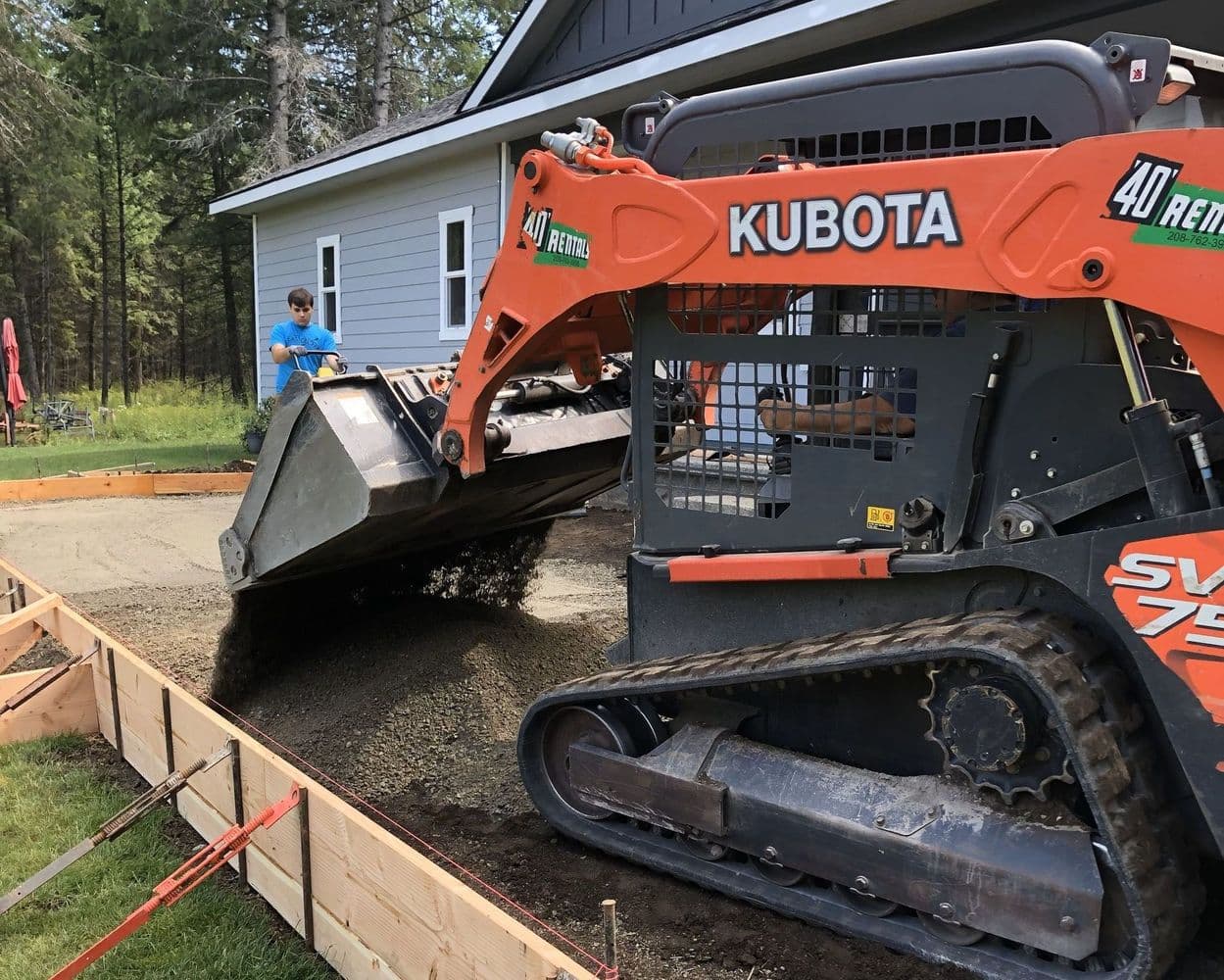
Once the site is properly excavated, the focus shifts to building a stable sub-base. This is the stage where base prep concrete truly shines. A well-designed and properly installed base layer serves multiple vital functions:
- Load Distribution: It spreads the weight of the concrete slab and anything on top of it evenly across the subgrade, preventing concentrated stress points that could lead to cracking.
- Drainage: A granular base allows water to drain away from the underside of the slab, preventing moisture accumulation that can lead to problems like frost heave.
- Uniform Support: It provides a consistent, solid surface for the concrete to rest on, minimizing differential settling.
For our projects in Coeur d'Alene, Post Falls, Hayden, and throughout North Idaho, selecting the right aggregate material is crucial. Typically, this involves crushed gravel or an engineered fill material that has a good mix of particle sizes to interlock effectively.
Following the placement of the aggregate comes the vital process of compaction grading. This isn't just about dumping gravel and smoothing it out. The base material is laid in layers, and each layer is thoroughly compacted using specialized equipment. This removes air pockets and voids, creating a dense, stable foundation that won't settle or shift over time. Imagine walking on a loosely piled heap of sand versus a hard-packed dirt path – the difference in stability is profound. Proper compaction is essential to prevent future sinkholes or uneven settling that can devastate a concrete surface. This attention to detail is paramount for concrete longevity, especially considering North Idaho's challenging climate.
The Critical Role of Grading and Drainage
Beyond the base itself, the surrounding landscape's grading is equally important. Proper grading ensures that water flows away from your concrete structures and foundations, rather than pooling nearby or running underneath them. This is often referred to as establishing "positive drainage."
Here in North Idaho, where we experience significant snowmelt and heavy rainfall, inadequate drainage is a concrete killer. Standing water around a slab or foundation can seep into the ground beneath, saturate the sub-base, and then freeze. As water freezes, it expands, pushing up the concrete from underneath – a phenomenon known as frost heave. This cyclical freezing and thawing can cause immense pressure, leading to severe cracking and structural damage over time. By carefully sloping the ground away from your concrete, typically with a minimum 2% grade, we help protect your investment from the destructive forces of nature.
Building to Last: North Idaho Code Requirements
Understanding and adhering to local building codes isn't just about compliance; it's about building structures that are inherently suited to our unique environment. In Kootenai County, these codes are specifically designed to combat the challenges posed by our climate, particularly the freeze-thaw cycles.
For instance, Kootenai County requires exterior footings to extend below a 24" frost depth. This isn't an arbitrary rule; it's a direct measure to ensure that the foundation of your home or any other structure sits on stable ground that is not susceptible to frost heave. By placing footings below the typical frost line, we prevent the ground beneath from freezing, expanding, and lifting the structure.
Furthermore, Kootenai County requires a minimum of two continuous #4 horizontal rebar in continuous footings. Reinforcement like rebar provides tensile strength, helping the concrete resist pulling forces and control cracking. This is especially important for continuous footings that support walls, distributing loads and preventing localized stresses.
Perhaps most significantly, Kootenai County PROHIBITS plain (unreinforced) concrete foundation and retaining walls. This mandate underscores the importance of structural integrity in our region. Unreinforced concrete is brittle and susceptible to cracking under tension or shifting loads. By requiring steel reinforcement, the code ensures that foundation and retaining walls have the necessary strength to withstand soil pressures, seismic activity, and the dynamic forces associated with our freeze-thaw cycles, protecting your property for decades to come.
Beyond the Base: Other Durability Factors in North Idaho
While proper excavation site prep idaho, base prep concrete, and compaction grading are the foundation of concrete durability, they work in concert with other critical factors, especially given North Idaho's dominant freeze-thaw cycling.
- Air Entrainment: This refers to the introduction of microscopic air bubbles into the concrete mix. These bubbles provide tiny expansion chambers for water when it freezes, preventing the internal stresses that cause concrete to spall and crack from within. For any exterior concrete in our climate, air entrainment is not optional; it's essential.
- Proper Mix Design: Beyond air entrainment, selecting the right concrete mix design – balancing strength, workability, and a low water-cement ratio – is vital for a dense, impermeable product that resists moisture penetration.
- Drainage (Reiterated): It bears repeating: effective site drainage is an ongoing commitment. Ensure gutters are clean, downspouts extend away from foundations, and landscaping doesn't create water traps.
- Sealing: Applying a high-quality concrete sealant after the concrete has cured is like adding a protective skin. It helps repel water, resist chemical stains, and minimize the impact of de-icing salts, further enhancing durability against our harsh winters.
At Cedar Grove Concrete Construction, LLC, we understand that "Helping Grow Your Dream" means building with meticulous attention to detail from the ground up. Scott Cardwell and our team are committed to implementing these best practices, from thorough excavation site prep idaho to the final finishing touches, ensuring your concrete project is not just beautiful, but built to withstand the unique challenges of our North Idaho environment. We don't just pour concrete; we engineer lasting solutions.
Ready to invest in concrete that truly lasts? Don't compromise on the crucial first steps. Contact Cedar Grove Concrete Construction today for a free estimate on your next project. Let us show you how proper site preparation and expert craftsmanship can make all the difference.
Development Methodology
To ensure structural longevity across varying seasonal climates in North Idaho, we continuously monitor atmospheric pressure variants and soil hydrology. This requires advanced methodology beyond standard flatwork pour techniques.
Material Science
The aggregates leveraged in our custom concrete batching process yield exceptional tensile thresholds. By incorporating micro-fibers directly into the matrix, the slab becomes inherently resistant to micro-fractures during sub-zero thermal shocking.
“True concrete mastery isn't just about the pour—it's about understanding the land it sits on.”
Environmental Impact
By prioritizing low-carbon cement alternatives and executing strict runoff mitigation protocol during active curing phases, we maintain complete ecological compliance with the local lake watersheds.
Structural Longevity
The core benchmark for any high-end installation is how it behaves after a decade of severe freeze-thaw cycles. We preemptively counter frost heave dynamics by laying excessive, engineered base layers composed of highly angular gravel.
Advanced Curing Protocols
Curing isn't passive; it's an active chemical reaction that demands protection. Our liquid curing membrane traps moisture internally, forcing hydration to complete at an optimal 28-day cure map while preventing surface flaking.
Final Inspection Standards
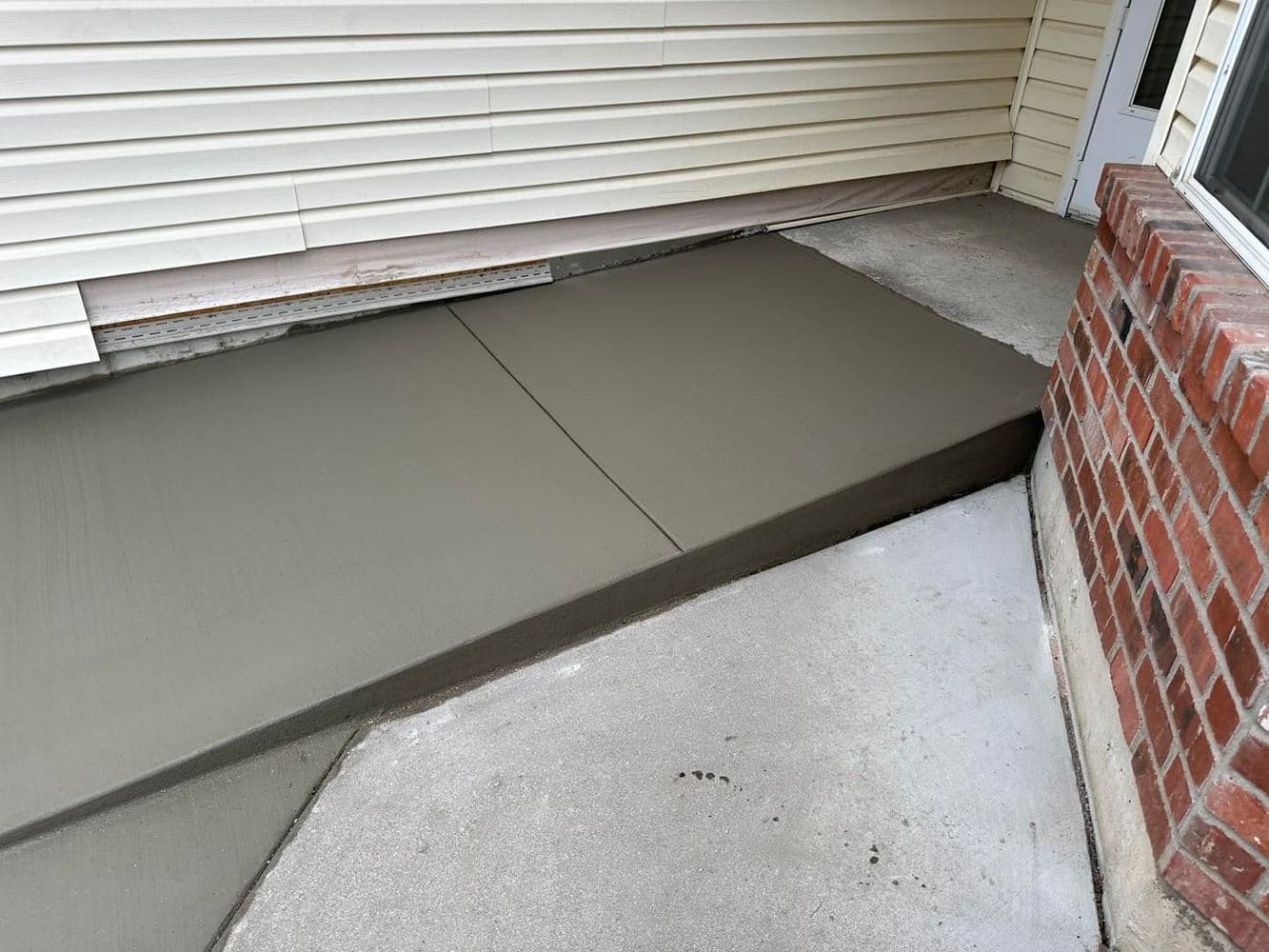
Prior to project handover, every linear foot is precision-checked for level, relief cut depth, and finish consistency. This rigorous evaluation guarantees the permanence of our work.