
Building a new home in North Idaho is an exciting journey, a chance to truly "Grow Your Dream" from the ground up. But before you can pick out paint colors or landscape your yard, you’re faced with one of the most critical decisions: what kind of foundation will support your dream home? Specifically, in areas like Coeur d'Alene, Post Falls, Hayden, and Sandpoint, the choice often comes down to a poured concrete foundation versus one made of concrete blocks. Both have their merits, but understanding their differences, especially in our unique North Idaho climate, is key to making an informed decision that ensures the long-term stability and value of your property.
Understanding Your Foundation Options
When considering concrete foundation types, it's essential to look beyond the immediate cost and think about the long-term durability, especially with our region's challenging weather patterns. Let's break down the two primary choices:
Poured Concrete Foundations
Imagine a solid, seamless envelope protecting the base of your home. That's essentially what a poured concrete foundation offers. The process involves excavating the site, installing steel reinforcing bars (rebar), setting up temporary forms, and then pouring liquid concrete directly into these forms. The concrete fills the entire cavity, encasing the rebar and creating a single, monolithic structure as it cures.
Advantages for North Idaho Homeowners:
- Exceptional Strength and Durability: Because it's a single, continuous unit, a poured concrete foundation boasts superior compressive strength and lateral resistance. This is incredibly beneficial in North Idaho, where seismic activity, expansive soils, and heavy snow loads can put significant stress on a foundation. The integrated rebar, often much more extensive than in block constructions, ensures maximum tensile strength.
- Superior Water Resistance: With fewer joints compared to block walls, poured concrete offers inherent resistance to water penetration. This is a massive advantage in an area prone to freeze-thaw cycles and spring thaws. While still requiring proper waterproofing and drainage, the monolithic nature minimizes pathways for moisture to seep into your basement or crawl space.
- Flexibility in Design: Poured concrete allows for a greater degree of customization in wall thickness, height, and even curved designs, giving architects and builders more freedom.
- Compliance with Local Codes: Kootenai County, for example, strictly prohibits plain (unreinforced) concrete foundation and retaining walls. Poured concrete foundations are designed from the start to incorporate significant reinforcement, easily meeting and often exceeding these requirements, including the minimum of two continuous #4 horizontal rebar in continuous footings.
Concrete Block Foundations
A block foundation, on the other hand, is constructed by stacking individual concrete masonry units (CMUs) or "blocks" with mortar joints in between. Each course of blocks is laid, creating a wall that is then reinforced as required by local codes.
Considerations for North Idaho Homeowners:
- More Joints, More Potential for Water Intrusion: The numerous mortar joints in a block wall create more potential pathways for water to penetrate, especially under hydrostatic pressure. While modern waterproofing techniques and drainage systems can mitigate this, the inherent vulnerability is higher than with a seamless poured wall.
- Reinforcement is Crucial (and Required): While blocks themselves are strong, their segmented nature means that for structural integrity, especially in seismic zones or for retaining earth, they must be reinforced. Remember, Kootenai County PROHIBITS plain (unreinforced) concrete foundation and retaining walls. This means that a block foundation here is not just stacked blocks; it requires vertical rebar placed in specific cells, which are then filled with concrete grout. This significantly adds to the complexity and labor involved beyond simple stacking.
- Susceptibility to Freeze-Thaw: While the blocks themselves are durable, the mortar joints can be more susceptible to the freeze-thaw cycles common in North Idaho if not properly mixed and protected. Water seeping into a hairline crack in a mortar joint can expand when frozen, slowly deteriorating the joint over time.
North Idaho's Unique Challenges and Code Considerations
Our beautiful North Idaho region comes with specific environmental factors that deeply influence foundation choices. The dominant durability factor here is freeze-thaw cycling. When water seeps into pores or cracks in concrete or mortar and then freezes, it expands by about 9%, creating immense internal pressure that can lead to cracking, spalling, and deterioration over time.
To combat this, regardless of whether you choose a poured or block foundation, several elements are non-negotiable for long-term durability in our climate:
- Air Entrainment: This is a special additive in concrete that creates microscopic air bubbles throughout the mix. These bubbles provide tiny chambers for water to expand into when it freezes, significantly reducing internal pressure and preventing cracking. For concrete flatwork like driveways and patios, and certainly for foundations, proper air entrainment is paramount in North Idaho.
- Proper Mix Design: Beyond air entrainment, the overall concrete mix design must be robust, with the correct water-to-cement ratio and aggregate quality, to withstand the elements.
- Drainage: Meticulous site drainage, including perimeter drains and proper grading, is essential to divert water away from the foundation regardless of its type. Water accumulating around the base of your home is an enemy to any foundation in a freeze-thaw climate.
- Sealing: Applying a quality sealer to exposed concrete surfaces helps to reduce water absorption, further protecting against freeze-thaw damage.
Furthermore, local building codes are designed with these challenges in mind. Cedar Grove Concrete Construction, LLC, is intimately familiar with these specifics, ensuring every project meets or exceeds local standards:
- Frost Depth: Kootenai County requires exterior footings to extend below a 24-inch frost depth. This ensures your foundation is anchored below the level where the ground freezes and thaws, preventing damaging "frost heave" which can lift and crack foundations.
- Reinforcement: As mentioned, Kootenai County requires a minimum of two continuous #4 horizontal rebar in continuous footings, and absolutely PROHIBITS plain (unreinforced) concrete foundation and retaining walls. This mandates that any concrete foundation, whether poured or block, must be adequately reinforced with steel to handle the structural loads and environmental stresses of our region.
Making the Right Choice for Your Home
When you're comparing poured foundation vs block Idaho, it’s not just about what's cheaper today, but what will last for decades and truly "Grow Your Dream."
Here are some points to consider:
- Overall Durability and Longevity: Poured concrete, with its monolithic strength and fewer joints, often offers superior long-term resistance to water intrusion and structural stresses, especially in our freeze-thaw climate.
- Waterproofing Needs: While both require proper waterproofing, the continuous nature of poured concrete generally offers a more inherently water-resistant shell.
- Construction Timeline: Poured concrete can often be faster once forms are set, as the entire wall cures simultaneously. Block foundations are built course by course, which can be a more extended process, especially if reinforcement and grouting are involved.
- Structural Integrity: Both, when properly designed, reinforced, and installed to meet Kootenai County codes, provide a strong foundation. However, poured concrete often has a higher load-bearing capacity and shear strength due to its seamless nature.
- Future Flexibility: A robust, well-built foundation, regardless of concrete foundation types, provides a solid base for any future additions or modifications to your home.
Ultimately, both concrete block and poured concrete foundations can serve as a strong base for your home when properly designed and installed to meet North Idaho's unique challenges and local building codes. However, for many homeowners in Coeur d'Alene and the surrounding areas, the continuous strength, superior water resistance, and ease of meeting reinforcement requirements often make a strong case for poured concrete.
Choosing the right foundation is a monumental decision, one that Cedar Grove Concrete Construction, LLC takes seriously. Our expertise in North Idaho concrete work ensures that your foundation will be built to last, providing the strong, stable base your dream home deserves.
Ready to lay the groundwork for your North Idaho dream home? Contact Scott Cardwell at Cedar Grove Concrete Construction, LLC today for a free estimate and let us help you build a foundation that will stand the test of time.
Development Methodology
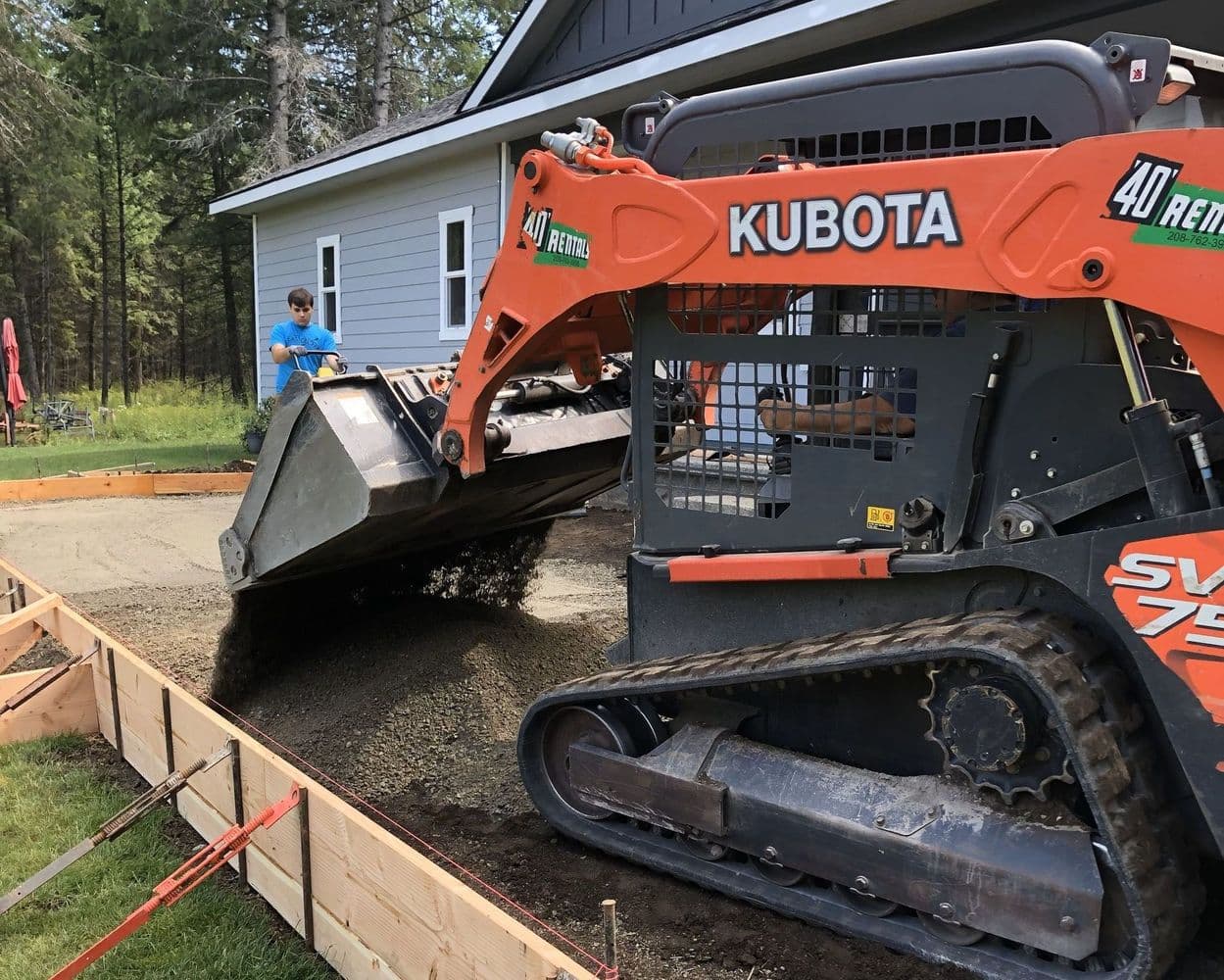
To ensure structural longevity across varying seasonal climates in North Idaho, we continuously monitor atmospheric pressure variants and soil hydrology. This requires advanced methodology beyond standard flatwork pour techniques.
Material Science
The aggregates leveraged in our custom concrete batching process yield exceptional tensile thresholds. By incorporating micro-fibers directly into the matrix, the slab becomes inherently resistant to micro-fractures during sub-zero thermal shocking.
“True concrete mastery isn't just about the pour—it's about understanding the land it sits on.”
Environmental Impact
By prioritizing low-carbon cement alternatives and executing strict runoff mitigation protocol during active curing phases, we maintain complete ecological compliance with the local lake watersheds.
Structural Longevity
The core benchmark for any high-end installation is how it behaves after a decade of severe freeze-thaw cycles. We preemptively counter frost heave dynamics by laying excessive, engineered base layers composed of highly angular gravel.
Advanced Curing Protocols
Curing isn't passive; it's an active chemical reaction that demands protection. Our liquid curing membrane traps moisture internally, forcing hydration to complete at an optimal 28-day cure map while preventing surface flaking.
Final Inspection Standards
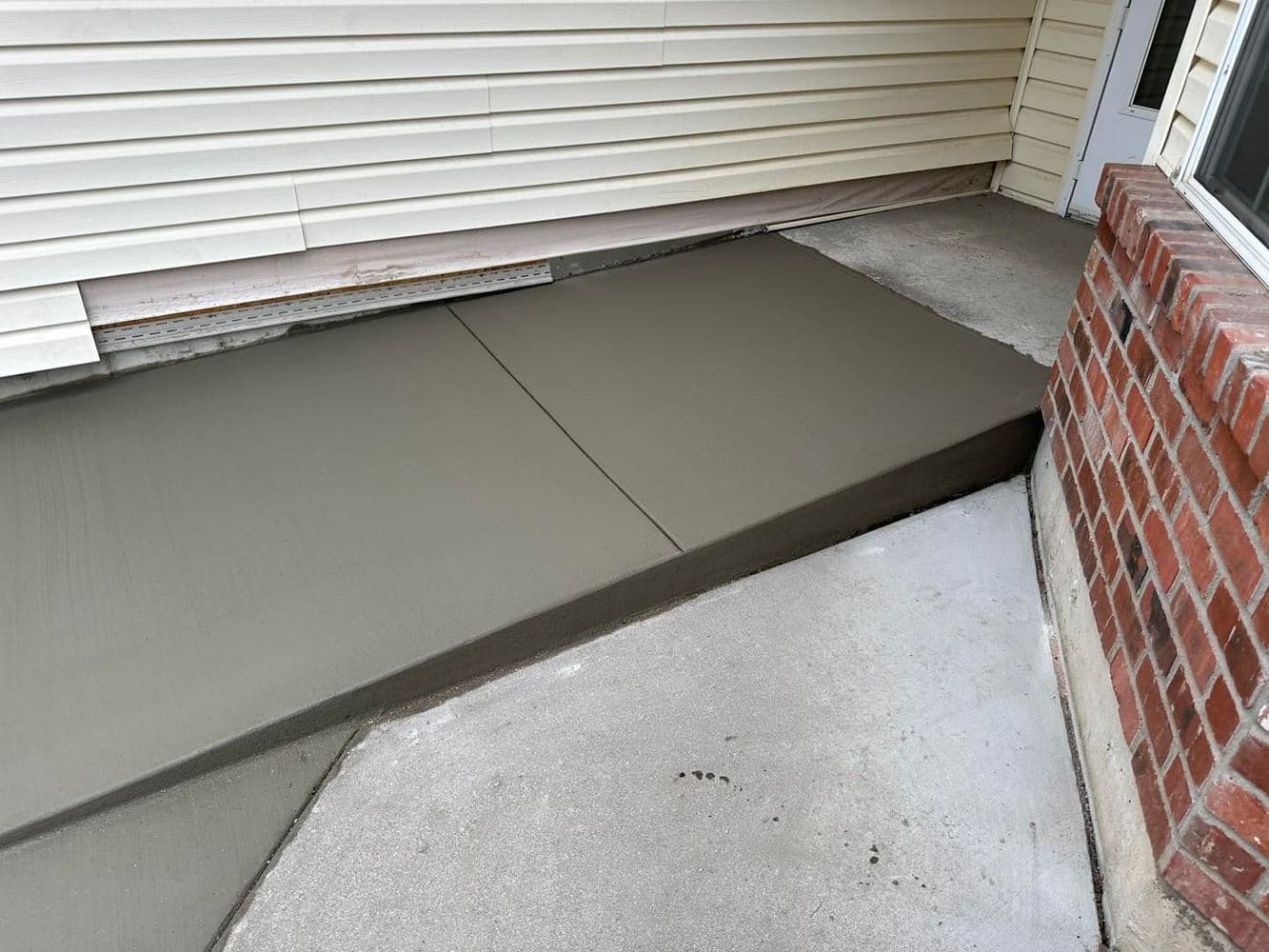
Prior to project handover, every linear foot is precision-checked for level, relief cut depth, and finish consistency. This rigorous evaluation guarantees the permanence of our work.