
When you think about the longevity of your driveway, patio, or even your home's foundation here in Coeur d'Alene, Post Falls, or Hayden, what comes to mind? Many homeowners picture strong rebar, a solid pour, or perhaps a beautiful decorative finish. While all of those are vital, there's a microscopic hero working tirelessly within your concrete, especially critical for our North Idaho climate: air entrainment. It's a fundamental detail in the concrete mix design that can truly make or break your concrete's durability against our famously harsh winters.
Understanding the North Idaho Challenge: Freeze-Thaw Cycles
Our region is breathtakingly beautiful, but let's be honest, winters in Spokane, Sandpoint, and across Kootenai County are no joke. We experience significant snowfall, fluctuating temperatures, and frequent freeze-thaw cycles. This constant shift from freezing cold to thawing warmth is the dominant durability factor for any outdoor concrete.
Here’s how it works: concrete is naturally porous, meaning it has tiny capillaries and voids. When water seeps into these spaces and then freezes, it expands by about 9%. This expansion creates immense internal pressure within the concrete. Over time, repeated cycles of freezing and thawing cause this pressure to build, leading to surface damage like scaling, spalling (flaking or chipping), and eventually, deeper cracks. Imagine tiny explosions happening inside your concrete again and again – that's the freeze-thaw challenge.
What is Air Entrainment and How Does It Help?
This is where air entrainment comes in. It's not just accidental air bubbles; it’s a carefully engineered part of the concrete mix design. During mixing, a special additive is introduced that creates billions of microscopic air bubbles – typically 5% to 8% of the concrete's volume – uniformly distributed throughout the mix. These bubbles are incredibly tiny, much smaller than you could see with the naked eye, and they are intentionally stable, designed to remain in the hardened concrete.
Think of these tiny bubbles as miniature pressure relief valves. When water inside the concrete freezes and expands, instead of exerting destructive pressure on the surrounding concrete paste, it has an escape route. The expanding ice can migrate into these strategically placed air bubbles, effectively relieving the internal stress. This simple yet brilliant mechanism dramatically increases the concrete’s resistance to damage from freezing and thawing. For homeowners seeking the most resilient concrete in Idaho, specifying an air entrained concrete mix is non-negotiable.
Beyond Air Entrainment: Crafting a Superior Concrete Mix
While air entrainment is paramount, it's just one piece of the puzzle for truly durable concrete in our climate. At Cedar Grove Concrete Construction, LLC, we understand that a high-quality concrete mix design involves several critical elements:
- Water-Cement Ratio: This is arguably the most important factor in concrete strength and durability. A lower water-cement ratio generally results in stronger, less porous concrete, making it more resistant to water penetration and thus, freeze-thaw damage. Too much water dilutes the cement paste, weakening the final product.
- Aggregate Quality: The sand and gravel used in the mix must be clean, strong, and properly graded. Poor quality aggregates can lead to weaker concrete and contribute to durability issues.
- Admixtures: Beyond air entrainment, other admixtures can enhance workability, accelerate or retard setting times, or improve strength.
- Proper Curing: After concrete is poured, it needs time and moisture to properly hydrate and gain strength. Adequate curing, especially in our fluctuating temperatures, is essential for reaching its full potential strength and durability.
The Foundation of Durability: Site Prep and Structural Integrity
Even the best concrete mix won't perform if it's not installed correctly on a proper base. This is where comprehensive site preparation and structural considerations become crucial for any concrete project, from a simple patio to a complex foundation.
- Excavation and Subgrade Preparation: A stable, well-compacted subgrade is the bedrock of any successful concrete pour. Without proper excavation and preparation, uneven settling can lead to cracks and structural failures.
- Drainage: Preventing water from pooling around or under your concrete is critical. Proper grading, and sometimes even drainage systems, can direct water away, significantly reducing the amount of moisture available to cause freeze-thaw damage.
- Rebar and Reinforcement: Structural integrity is vital. Kootenai County building codes, for example, require exterior footings to extend below a 24-inch frost depth to prevent frost heave. Furthermore, continuous footings in Kootenai County require a minimum of two continuous #4 horizontal rebar. These aren't arbitrary rules; they are designed to give your concrete the necessary strength and stability against ground movement and heavy loads. For foundational work, Kootenai County PROHIBITS plain (unreinforced) concrete foundation and retaining walls precisely because of the need for structural strength in our challenging environment.
- Sealing: Once your concrete has cured, applying a high-quality sealer adds an extra layer of protection against moisture penetration, chemical attack (like de-icing salts), and stains. This is especially important for areas exposed to heavy snow and ice.
Cedar Grove Concrete: Building for North Idaho's Future
At Cedar Grove Concrete Construction, LLC, owner Scott Cardwell and our team are dedicated to "Helping Grow Your Dream" with concrete that stands the test of time and the unique challenges of our North Idaho environment. Whether you're planning a new driveway, a beautiful stamped patio, a solid foundation, or even a heated driveway system to combat the snow, we understand the science behind durable concrete.
We meticulously consider all aspects of your project – from the initial excavation and site prep to specifying the optimal air entrained concrete mix for Idaho's freeze-thaw cycles, ensuring proper reinforcement meets or exceeds Kootenai County codes, and executing precise pouring and finishing. When you choose us for your residential flatwork, foundations, or commercial concrete needs in Coeur d'Alene, Post Falls, Hayden, Rathdrum, Spirit Lake, Sandpoint, or Spokane WA, you're choosing a partner committed to lasting quality.
Don't let the harsh winters compromise your investment. Ensure your concrete is built to endure. Contact Cedar Grove Concrete Construction today for a free estimate and let us help you lay a durable foundation for your future.
Development Methodology
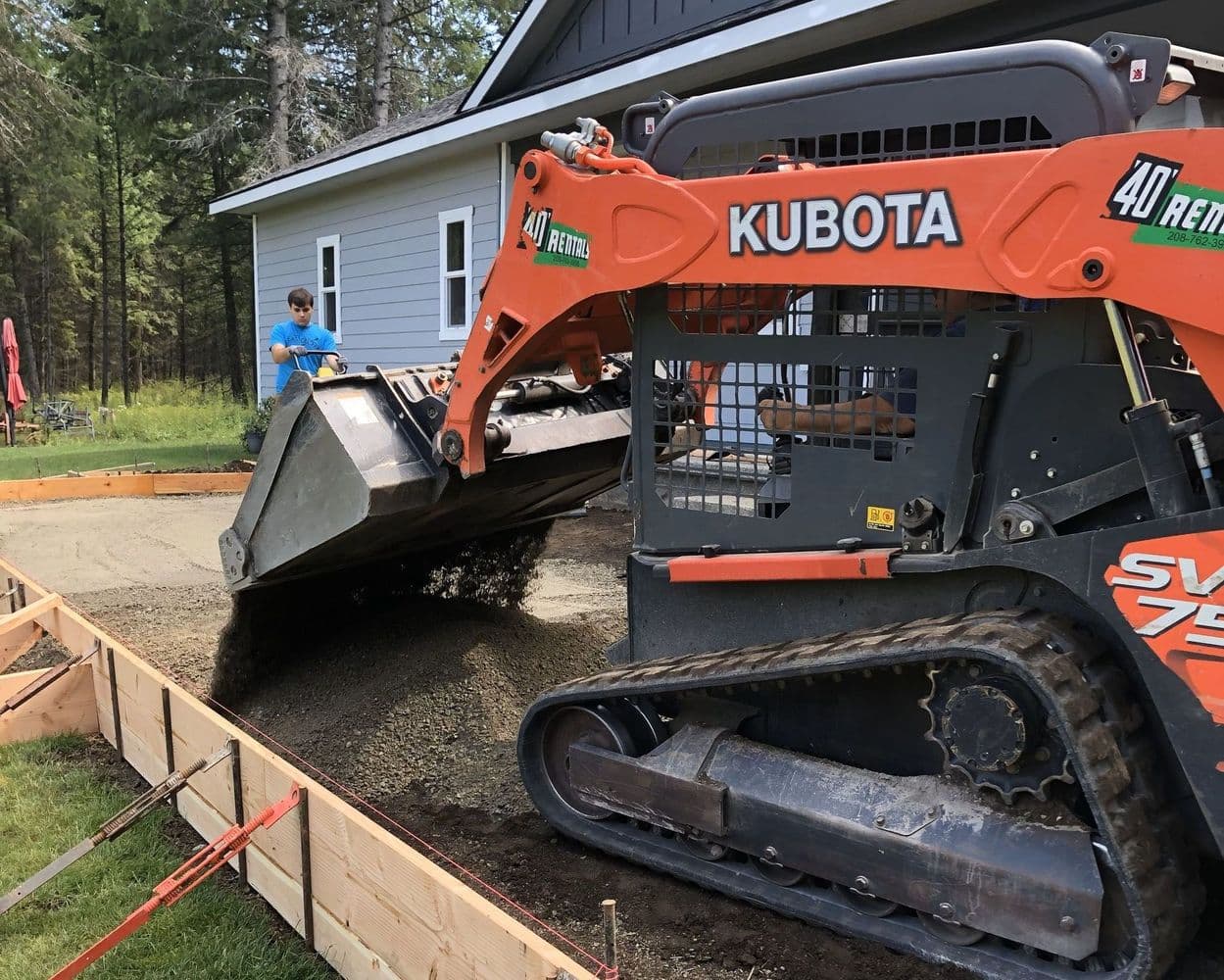
To ensure structural longevity across varying seasonal climates in North Idaho, we continuously monitor atmospheric pressure variants and soil hydrology. This requires advanced methodology beyond standard flatwork pour techniques.
Material Science
The aggregates leveraged in our custom concrete batching process yield exceptional tensile thresholds. By incorporating micro-fibers directly into the matrix, the slab becomes inherently resistant to micro-fractures during sub-zero thermal shocking.
“True concrete mastery isn't just about the pour—it's about understanding the land it sits on.”
Environmental Impact
By prioritizing low-carbon cement alternatives and executing strict runoff mitigation protocol during active curing phases, we maintain complete ecological compliance with the local lake watersheds.
Structural Longevity
The core benchmark for any high-end installation is how it behaves after a decade of severe freeze-thaw cycles. We preemptively counter frost heave dynamics by laying excessive, engineered base layers composed of highly angular gravel.
Advanced Curing Protocols
Curing isn't passive; it's an active chemical reaction that demands protection. Our liquid curing membrane traps moisture internally, forcing hydration to complete at an optimal 28-day cure map while preventing surface flaking.
Final Inspection Standards
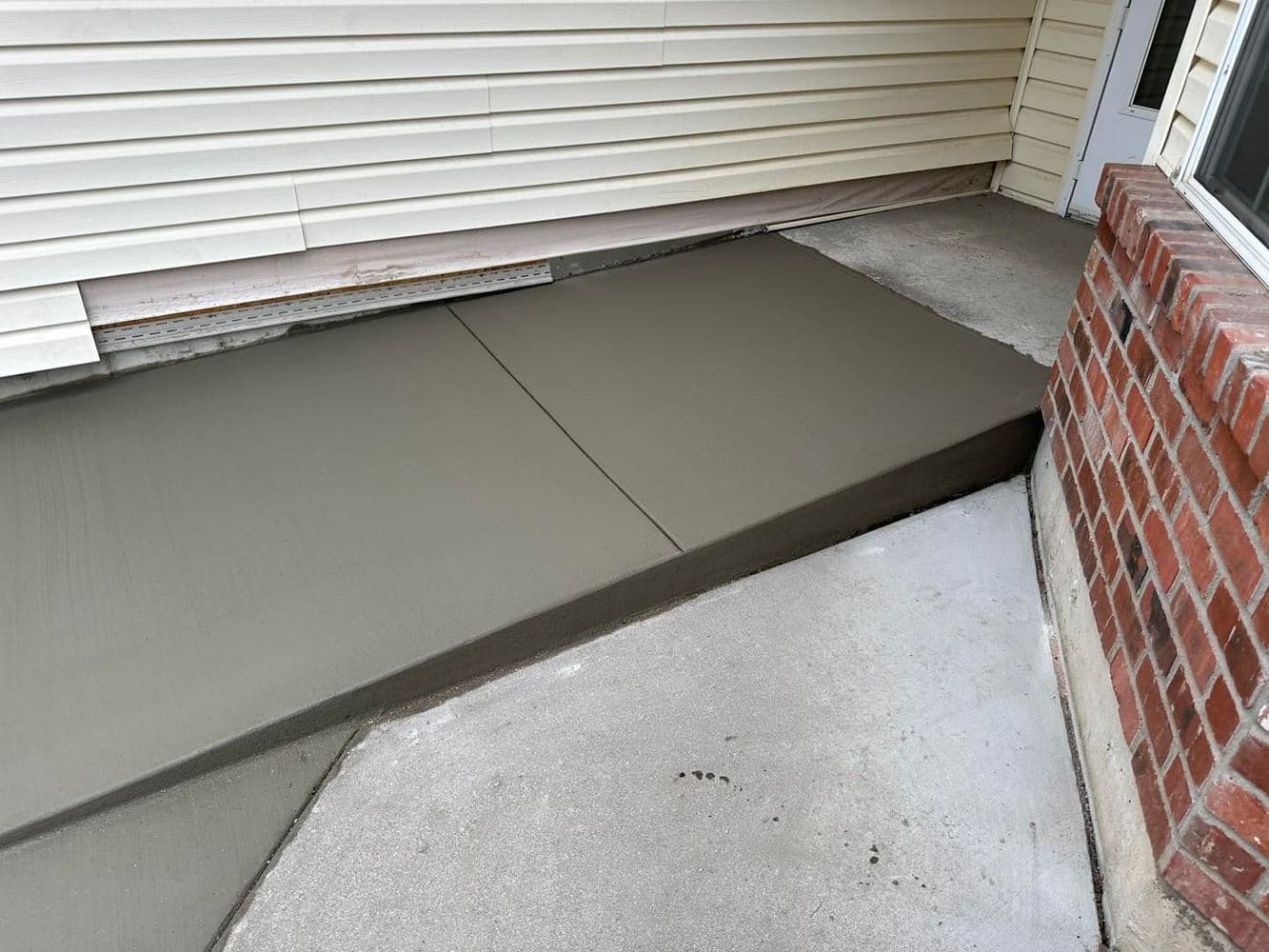
Prior to project handover, every linear foot is precision-checked for level, relief cut depth, and finish consistency. This rigorous evaluation guarantees the permanence of our work.